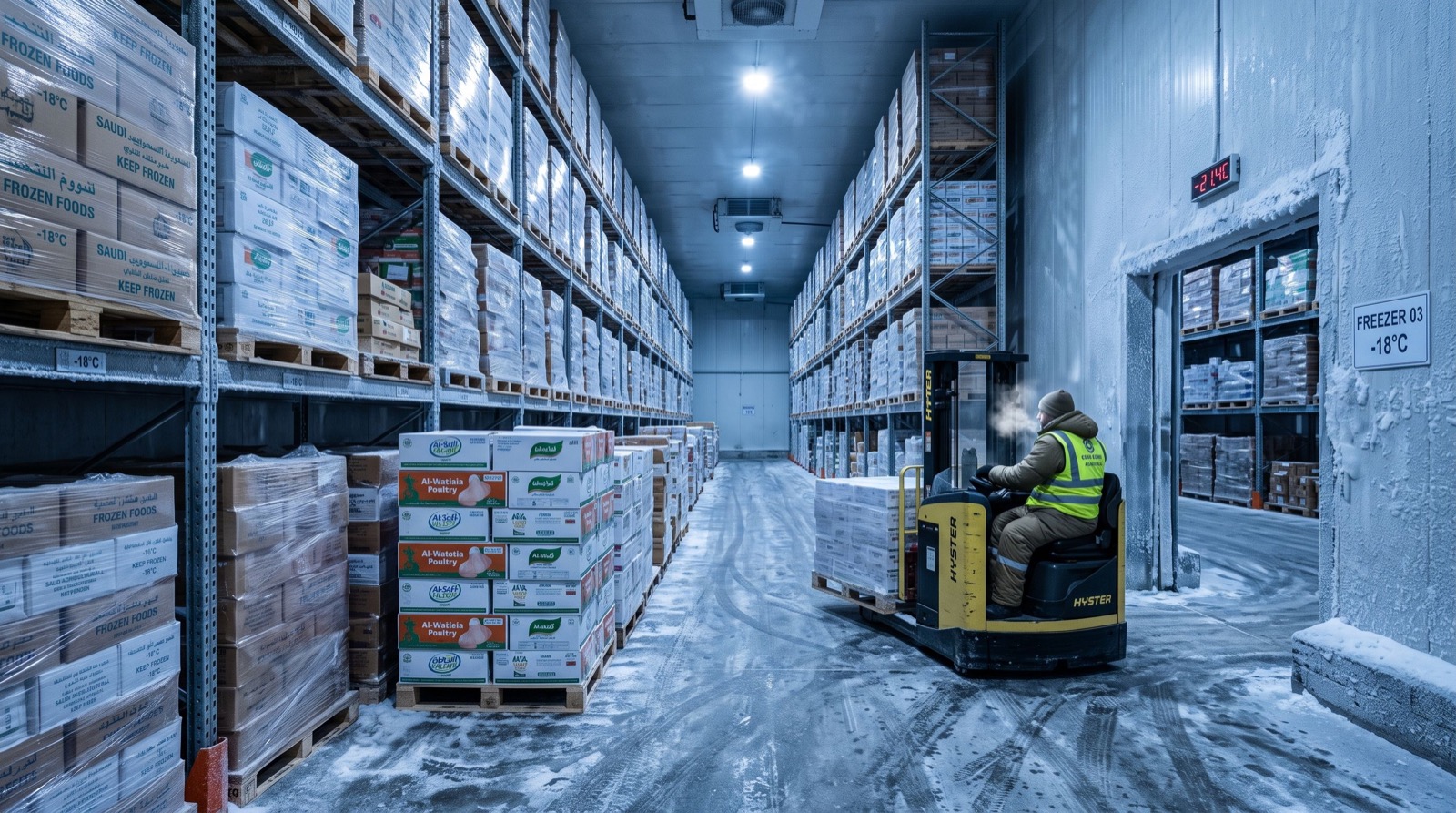
Spare parts storage in Saudi Arabia looks deceptively simple from the outside: buy some racking, label a few shelves and move on. In reality, the parts room is where equipment dealers, fleet operators and maintenance contractors quietly bleed money. A critical bearing nobody can locate, a control module cooked by summer heat, or a wall of obsolete filters all cost real riyals, and the losses rarely show up on any single invoice.
The stakes keep rising in 2026. Vision 2030 construction, logistics and industrial projects continue to expand machinery fleets across Riyadh, Jeddah and the Eastern Province, and every machine drags a long tail of consumable and critical components behind it. Below are the seven mistakes that appear most often in Saudi parts operations, along with a practical fix for each one.
Mistake 1: Treating Spare Parts Storage Like General Cargo
A pallet of tiles and a box of injectors do not belong in the same system. General cargo thinking leads to parts stacked by size instead of by SKU, which guarantees slow picking, duplicate purchases and phantom stock.
Dedicated parts operations rely on bin locations, small-parts drawers, vertical racking and strict put-away rules. If your storekeeper needs more than two minutes to find a common item, the layout is costing you labour every single day.
Mistake 2: Underestimating the Saudi Climate
Coastal humidity in Jeddah and Dammam corrodes machined surfaces, while inland heat degrades rubber seals, belts and lubricants. Un-conditioned sheds can pass 50°C in July, far beyond what most manufacturers allow for warehousing.
Purpose-built facilities solve this with insulated, ventilated space and sealed floors. Providers offering specialised Storage for Spare Parts maintain stable conditions and dust control, which is exactly what precision components need to hold their value over months of shelf life.
Mistake 3: Skipping Bin-Level Tracking
Many Saudi workshops still track inventory at warehouse level only. The system insists the part exists, yet nobody knows which aisle, rack or drawer actually holds it, so technicians order a duplicate and the original ages into scrap.
- Assign a unique bin code to every location, down to individual drawers.
- Scan parts in and out; never rely on memory or loose paperwork.
- Cycle count fast movers monthly and slow movers quarterly.
Teams that adopt bin-level discipline routinely cut picking time in half within a single quarter.
Mistake 4: Shelving Electronics Beside Heavy Metal Parts
Sensors, ECUs, drives and smart controllers fail differently from gears and shafts. They are vulnerable to static, dust, vibration and heat, and one dropped crankshaft nearby can write off an entire shelf of circuit boards.
Segregate them physically and handle them differently. Facilities that provide dedicated Storage for Electronics & Smart Devices use anti-static packaging, temperature control and gentler handling protocols, which keeps warranty claims and dead-on-arrival rates down.
Mistake 5: Buying Space Instead of Renting Flexibility
Parts demand is lumpy. A new maintenance contract can double your inventory overnight, and a lost tender can halve it a month later. Owning a fixed warehouse forces you to pay for your peak volume all year long.
Renting scalable units lets cost track actual stock instead. With industrial land prices climbing in the main Saudi cities through 2026, flexibility usually beats ownership for any operation below true enterprise scale.
Mistake 6: Weak Inbound Inspection
Damage and mislabelling normally enter the parts room at the receiving dock. When nobody checks part numbers, quantities and condition on arrival, the errors get buried in the racking and resurface at the worst possible moment, mid-repair with a customer waiting.
- Photograph every damaged carton before signing the delivery note.
- Verify part numbers against the purchase order, not the packing slip alone.
- Quarantine mismatches in a clearly marked bay until the supplier responds.
Mistake 7: Signing With the First Warehouse You Visit
Storage partners differ enormously in security, fire systems, insurance and honesty about their own limits. Treat selection like any other procurement exercise: shortlist, visit, question, compare. Households comparing quality service providers for routine chores often do more diligence than companies placing millions of riyals of inventory, and that gap should embarrass more procurement teams than it does.
Ask for the civil defence certificate, the insurance schedule and references from tenants storing similar goods before anything gets signed.
Why Do Spare Parts Lose Value in Storage?
Three forces erode a parts inventory: physical degradation, obsolescence and administrative loss. Research published by McKinsey on service and aftermarket operations has repeatedly identified excess and obsolete stock as one of the largest hidden costs in industrial supply chains.
The risk profile changes sharply by category, and so should the storage requirement. This table shows the pattern.
| Part Category | Main Risk | Storage Requirement |
|---|---|---|
| Rubber seals and belts | Heat ageing | Cool, dark, ventilated space |
| Machined metal parts | Corrosion | Low humidity, sealed packaging |
| Electronics and sensors | Static, heat, dust | Climate control, anti-static handling |
| Filters and consumables | Obsolescence | FIFO rotation, tight min-max levels |
Frequently Asked Questions
How long can spare parts be stored safely?
It depends on the material. Machined metal parts kept in sealed, low-humidity conditions can last for years, while rubber components typically degrade within three to five years even in good conditions. Follow the manufacturer’s shelf-life guidance and rotate stock on a first-in, first-out basis.
Is climate-controlled spare parts storage worth the cost in Saudi Arabia?
For electronics, rubber and precision components, yes. The premium is small compared with the replacement cost of a single ruined batch, especially in summer, when uncontrolled sheds regularly exceed safe storage temperatures for weeks at a time.
Should I keep spare parts storage in-house or outsource it?
Small, fast-moving inventories usually stay in-house beside the workshop. Once stock value grows, or you need climate control, security and insurance you cannot justify building yourself, a specialised provider becomes both the cheaper and the safer option.
Quick Wins You Can Apply This Month
You do not need a new building to start capturing value. Most of the gains from better spare parts storage come from process, and process is free. Begin with the fixes that pay back within weeks.
- Run a two-hour walk-through and photograph every congested aisle, blocked rack and unlabelled shelf.
- Pick your twenty fastest-moving SKUs and give each one a dedicated, labelled bin at waist height.
- Move rubber and electronic items out of direct sunlight and away from external walls today.
- Set a monthly review to flag any part untouched for twelve months as an obsolescence candidate.
Teams that complete these four steps typically uncover duplicate stock worth more than a month of storage fees, which makes the business case for further improvements write itself.
The Bottom Line
Strong spare parts storage is uptime insurance, not a cost centre. Fix the seven mistakes above and you will find parts faster, scrap less stock and defend your margins as Saudi demand keeps climbing through 2026. Start with a simple audit of your parts room this week, and if the gaps look expensive to close alone, collect quotes from specialised providers before your next big stock intake arrives.